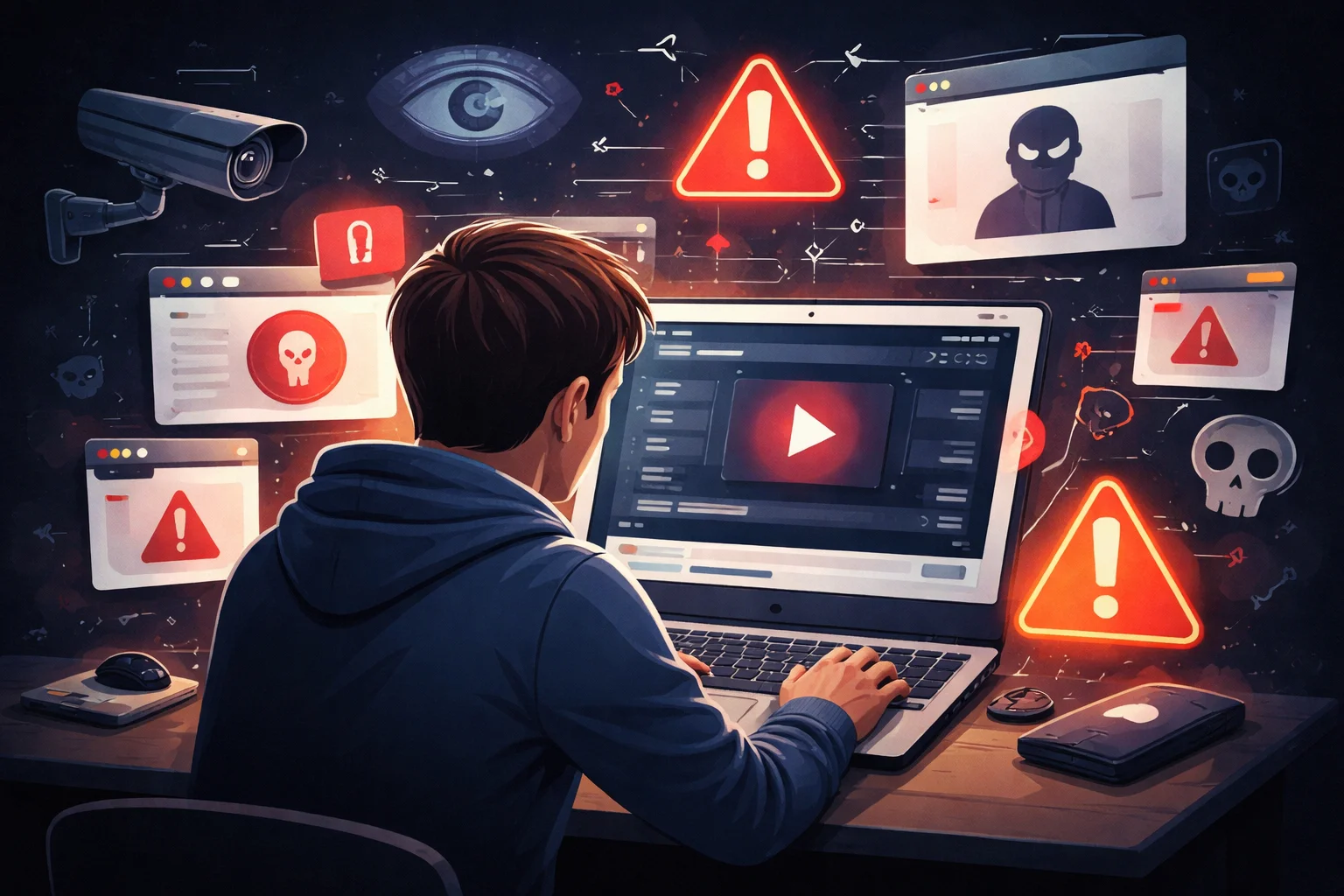
You click on a free streaming site because you just want to watch a movie or a match without paying. Within seconds, pop-ups appear, your browser slows down, and you’re not fully sure what you just agreed to by clicking “Play.”
This article helps you understand what’s actually happening behind the scenes, what privacy risks are common on free streaming websites, and how to make safer choices if you decide to use them.
Why do free streaming websites pose privacy risks?
Free streaming websites don’t usually make money from subscriptions.
Instead, many rely on advertising networks, tracking tools, or data collection to survive.
Because of this, your personal data often becomes part of the “payment.”
These sites may collect information without clearly explaining it, or they may allow third-party scripts that do the tracking for them. The result is a higher privacy risk compared to legitimate paid platforms.
What kind of data can free streaming sites collect?
Browsing behavior and device information
Many free streaming sites automatically log your IP address, browser type, device model, screen size, and operating system.
This data helps advertisers identify you across different websites and build a profile of your online habits.
Location data
Even if you never type your location, your IP address can reveal your country, city, and sometimes your internet provider.
This information is often used for targeted ads or sold to ad networks.
Cookies and hidden trackers
Free streaming sites frequently load dozens of third-party trackers in the background.
These trackers follow what you watch, how long you stay, what you click, and which other sites you visit later.
How pop-ups and redirects put your privacy at risk
Forced redirects to unknown sites
Clicking anywhere on some free streaming pages can redirect you to unrelated websites.
These pages may attempt to install tracking cookies, request permissions, or trick you into downloading files.
Fake system alerts and permissions
Some sites show fake warnings like “Your device is infected” or “Allow notifications to continue.”
If you allow notifications, the site can later push ads, scams, or tracking links directly to your device.
Can free streaming websites expose you to malware or spyware?
Malicious scripts hidden in ads
Not all ads are harmless banners. Some include scripts that try to fingerprint your device or exploit browser weaknesses.
Even without downloading anything, malicious code can run silently in the background.
Risky file downloads
Free streaming sites sometimes offer “HD players” or “special codecs” to improve playback.
These downloads often contain spyware or adware that tracks your activity beyond the streaming site itself.
Are free streaming sites compliant with privacy laws?
Lack of clear privacy policies
Many free streaming websites either have no privacy policy or display a generic one copied from elsewhere.
See also How to identify safe and unsafe streaming platforms
This makes it unclear who collects your data, how long it’s stored, or who it’s shared with.
No user control over data
Unlike regulated platforms, free streaming sites rarely offer options to manage cookies, opt out of tracking, or request data deletion.
In many cases, you have no practical control once you visit the site.
How free streaming can affect your long-term digital privacy
Data aggregation over time
Even small pieces of data become valuable when collected repeatedly.
Over time, your viewing habits, browsing behavior, and device details can be combined into a detailed profile.
Increased exposure to scams
Once your data enters advertising or tracking networks, you may start seeing more scam emails, fake offers, or phishing attempts elsewhere.
The connection is often invisible, but the source can trace back to unsafe sites.
How to reduce privacy risks if you use free streaming sites
Be cautious with clicks
Avoid clicking pop-ups, fake play buttons, or download prompts.
If something asks for permissions unrelated to streaming, it’s safer to decline.
Limit browser permissions
Regularly check your browser settings and remove notification permissions granted to unknown sites.
This reduces unwanted tracking and spam.
Use privacy-focused browsing habits
Keeping your browser updated, clearing cookies, and using reputable privacy tools can lower risk, though it won’t eliminate it completely.
The safest option is still choosing platforms that are transparent about data use.
Frequently Asked Questions
Is it illegal to visit free streaming websites?
Visiting a site is not always illegal, but streaming copyrighted content without permission may violate local laws. Privacy risks exist regardless of legality.
Can free streaming sites steal my personal information?
They usually don’t steal information like passwords directly, but they can collect and share data about your behavior, device, and location.
Are all free streaming sites unsafe?
Not all are equally risky, but many lack transparency and security controls. Caution is always recommended.
See also Whether a platform like Voddler.co.uk is legal and safe to use
Final thoughts
Free streaming websites may feel convenient, but the hidden cost is often your privacy.
Data collection, aggressive tracking, pop-ups, and weak transparency make these platforms risky for everyday use.
Understanding how these sites operate helps you make informed decisions. Whether you choose safer alternatives or take extra precautions, awareness is the first step toward protecting your digital privacy and maintaining long-term trust in how you use the internet.